

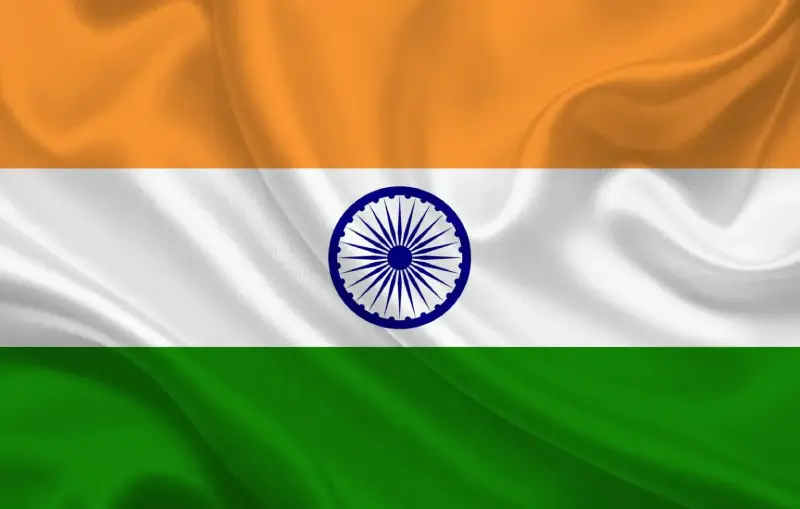
tirangamains: A Symbol of Unity and Patriotism
The Tiranga is the national flag of India, holds a deep symbolic meaning that embodies the essence of the nation’s identity, unity, and freedom. It serves as a powerful representation of the values and struggles of the Indian people, reflecting the country’s vibrant culture, rich history, and unwavering spirit of independence. This three-colored flag, known as the “Tiranga,” stands as a testament to the collective effort of millions who fought for India’s freedom, and today, it continues to inspire pride and patriotism among Indians across the globe.
Across India, the national flag is visible at schools, public institutions, community gatherings and important national events. Its familiar colours connect people who speak different languages, follow different traditions and live in very different landscapes. From villages and small towns to major cities, the flag provides a shared symbol of belonging. It reminds citizens that their country includes many identities and experiences, and that respect for one another is part of the idea of national unity.
The flag is also a reminder of responsibility. Respecting the Tiranga is not limited to standing before it during a ceremony. The values associated with it can be expressed through everyday choices: treating neighbours fairly, participating in civic life, helping communities during difficult times and learning about India's democratic institutions. Patriotism can be quiet and practical as well as visible at public celebrations.
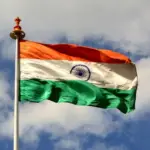
India's national flag is rectangular, with three equally sized horizontal bands. Saffron occupies the top band, white the middle and green the bottom. At the centre of the white band is a navy-blue Ashoka Chakra with twenty-four spokes. The ratio of the flag's length to its height is three to two. These details distinguish the national flag from decorative banners that may use similar colours but do not reproduce its official design.
The top saffron band is commonly associated with courage and the spirit of sacrifice. It invites reflection on the determination shown by people who worked for the country's independence and on the courage required to act responsibly in public life today. The colour should not be understood as representing only one region or community; the national flag belongs to the whole country.
The white middle band is commonly understood as a symbol of peace and truth. It can also prompt people to consider the importance of dialogue, honest conduct and fairness. In a nation of many languages, beliefs and customs, peace is not the absence of difference. It is the ability to live together despite differences, respect the rights of others and resolve disagreements through lawful and peaceful means.
The green band is associated with the land, growth and prosperity. India's farms, forests, mountains, rivers and cities support the daily lives of millions of people. The colour encourages reflection on development that serves communities while caring for natural resources. It can be connected to responsible citizenship, environmental awareness and the work required to improve living conditions over time.
The Ashoka Chakra is a particularly distinctive feature. It is drawn in navy blue at the centre of the flag and has twenty-four evenly spaced spokes. The wheel is based on the dharma chakra associated with the Lion Capital of Ashoka at Sarnath. It is frequently interpreted as a symbol of movement, duty and the continuing work of a nation. It replaced the spinning-wheel motif appearing in an earlier flag design when the present flag was adopted in 1947.
Because the flag brings these elements together, no single colour or emblem should be considered in isolation. Its meaning emerges from the complete design and from the democratic and historical context in which it is displayed. People may express a personal emotional connection to the Tiranga, but its status as the country's national flag gives it a public significance beyond individual interpretation.
Independence Day on 15 August is one of the most prominent occasions on which the national flag is displayed. Schools, offices and community organisations often arrange flag-hoisting ceremonies, speeches and cultural activities. Republic Day on 26 January is another major occasion, marking the date India's Constitution came into effect in 1950. Both days invite people to reflect on the country's history, constitutional framework and responsibilities as citizens.
In schools, learning about the flag can start with its basic design and develop into a deeper discussion about independence, constitutional values and national symbols. Students can examine the meaning of each element, compare historical flag designs and discuss what respectful display looks like. Activities are most useful when they explain the history accurately rather than reducing it to slogans or memorised facts.
Public celebrations often use decorations inspired by the three national colours. However, a decoration in saffron, white and green is not always the national flag itself. When the official flag is used, it should be treated according to the applicable rules and guidance. Citizens and organisers should distinguish between general tricolour themes and the actual national emblem they are displaying.
Digital images of the Tiranga are now shared widely through educational resources, invitations and social media posts. Accuracy remains important online. The order of the colours, placement of the Chakra and number of spokes should be represented correctly in materials describing the official flag. A respectful educational graphic is more informative when it also explains what the flag represents and identifies reliable sources for further reading.
For visitors interested in learning more, the Constitution of India, the Flag Code of India and publications from the Government of India are useful starting points. Official material should be consulted for current requirements about display, handling and other practical matters. This page is intended as general educational information rather than a substitute for current legal or government instructions.
Origin and History of the tirangamains
The journey of the Indian flag began long before the nation gained independence. The design of the Tiranga was adopted in its current form on July 22, 1947, by the Constituent Assembly of India, just weeks before India became a sovereign nation on August 15, 1947. However, the evolution of the flag dates back to the early 20th century.
Before the national flag took its present form, several designs appeared during India's freedom movement. Different groups and leaders used flags to express ideas about self-rule, solidarity and political identity. These designs did not all share the same colours, symbols or proportions. Their evolution illustrates how the search for a unifying national symbol developed alongside a wider movement for independence.
Early twentieth-century flags reflected the political conversations of their time. Some designs featured religious or regional symbols; others included stars, inscriptions or contrasting colour bands. These examples are historically significant, but they should not be confused with the present national flag. Dates and attributions for certain early designs can vary between popular accounts, so students should consult well-documented historical sources when researching particular examples.
Pingali Venkayya is widely recognised for his contribution to the development of India's national flag. He proposed flag designs during the independence movement, and his work became part of the evolution that led to the tricolour. The final design was adopted through the Constituent Assembly rather than by one individual's action alone. Understanding both individual contributions and the collective adoption process gives a fuller picture of the flag's history.
In 1931, the Indian National Congress adopted a tricolour design featuring saffron, white and green bands with a spinning wheel at the centre. The spinning wheel, or charkha, had become closely connected with the movement for self-reliance and the ideas promoted by Mahatma Gandhi. Although that design influenced the eventual national flag, it was associated with a political movement and was not yet the flag of independent India.
As independence approached, the need for a flag representing the whole nation became especially important. On 22 July 1947, the Constituent Assembly adopted the national flag that India uses today. The three horizontal bands remained, but the navy-blue Ashoka Chakra took the place of the charkha. The change created an emblem suited to use as a national symbol while preserving continuity with the earlier struggle for freedom.
India became independent on 15 August 1947. The Tiranga then became an enduring symbol of the country's new status and collective aspirations. Since that time, it has accompanied public ceremonies, sporting achievements, scientific milestones and moments of national remembrance. Although the events surrounding the flag change over generations, its essential design remains recognisable.
It is useful to distinguish Independence Day from Republic Day when discussing the flag's history. Independence Day commemorates the end of British colonial rule in 1947. Republic Day marks 26 January 1950, when India's Constitution came into effect. Both observances feature the national flag, but they commemorate different milestones in the country's modern history.
The Constitution establishes the institutions and principles of the Republic of India. Learning about the flag alongside the Constitution helps show why national symbols have civic meaning. Rights, duties, democratic processes and respect for the law provide a wider context for understanding the ideals expressed during flag ceremonies. The flag itself does not replace those institutions; it stands as a visible symbol of the nation they serve.
Rules about display and respectful treatment of the flag have also developed over time. The Flag Code of India, 2002, brings together instructions relating to the display of the national flag, and it has been amended. The Prevention of Insults to National Honour Act, 1971, is also relevant. Because specific requirements can change, anyone organising a flag display should check the latest official guidance instead of relying on an old poster or an informal social media post.
When preparing a flag ceremony, organisers should pay attention to the correct design and condition of the flag, the way it will be displayed, and how it will be handled afterward. Educational institutions may also explain why a worn or damaged flag should not simply be reused. Exact procedures should follow current official guidance, particularly for special settings or large public events.
The history of the flag is also the history of ordinary people. Freedom was shaped by public meetings, writing, peaceful protest, organising, debate and many personal sacrifices. Women and men from different communities and regions contributed to the wider independence movement. Remembering that range of participation helps prevent a national symbol from being reduced to a single person, place or episode.
Photographs, museum collections and archived newspapers can help learners see how flag designs and ceremonies changed over the decades. When viewing historical images, consider their dates and circumstances. A photograph of an earlier movement flag may look different from the present Tiranga because it belongs to a different period. That distinction is part of the historical story, not an error to overlook.
For children, a useful approach is to build a simple timeline: early freedom-movement flags, the 1931 tricolour, adoption by the Constituent Assembly in July 1947, Independence Day in August 1947 and the commencement of the Constitution in January 1950. Each stage can be linked to a different question about the country's journey and the creation of its shared national symbols.
Another approach is to study the Ashoka Chakra more closely. Students can locate Sarnath on a map, learn about the Lion Capital of Ashoka and observe the arrangement of the wheel's spokes. A historical discussion should distinguish what is documented about the emblem's origin from later personal or symbolic interpretations. This helps students develop the habit of checking claims before passing them on.
Local communities may have their own memories of independence celebrations or stories about how national days were observed in earlier generations. Interviews with family members can make the subject more personal, but recollections should be treated as oral history and compared with documented facts. Different perspectives can enrich an understanding of the same national symbol.
The Tiranga is familiar because it appears so often, yet its history deserves more than a passing glance. The design links India's independence movement with its identity as a constitutional republic. Learning how it developed, what its elements signify and how it should be displayed responsibly allows people to appreciate it with greater understanding.
For authoritative background, consult the Ministry of Home Affairs' information on the national flag and the Flag Code of India, along with official constitutional and historical resources. This website offers introductory context only. It is not an official government service and does not issue permission, certificates or legal advice concerning the national flag.